
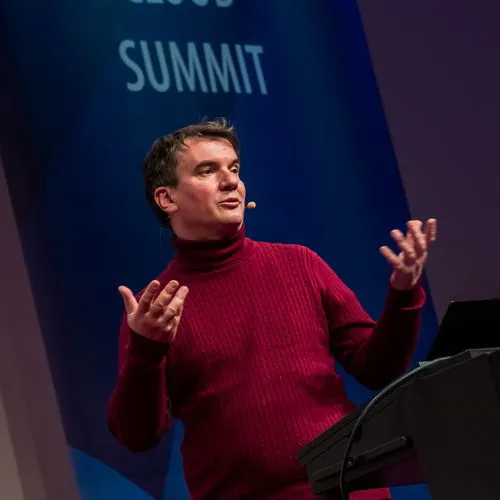
One of my cherished routines on the first main day of the ECS, right after the grand opening, is to walk the expo hall. I greet our longstanding sponsors who've been with us for over a decade, and meet the new ones joining us on this journey. I feel somewhat like Salvor Hardin walking her perimeter every morning in Apple's TV show "Foundation", checking the pulse of her domain, sensing where trouble might brew.
After fifteen years of this ritual, I've developed a sixth sense. Within minutes, I can tell which sponsors will thrive and which will struggle. Two sales guys hunched over laptops answering emails? Dead in the water. A buzzing booth with marketing staff and technical experts eager to engage? They'll have a line of leads by lunch.
The fascinating part? Success doesn't correlate with booth size. I've watched smaller booths outperform elaborate custom built stands that cost a fortune. It's about the match between audience interests, exhibitor offerings, and most critically, exhibitor attitude.
For years, this was just a gut feeling - useful, but hardly scientific. And definitely not scalable. I can't clone myself for every event, and our team would probably say that one of me is already more than enough to handle.
But here's where things gets interesting: with AI, we can now back up those gut feelings with rock-solid data.
Harnessing AI for Deep Sponsor Insights
Modern AI analyzes sponsor performance with a depth that makes my fifteen years of observation look like finger painting. It tracks which booths drew quality engagement - actual conversations, not just badge scans from people grabbing swag. It identifies which audience types visited which sponsors. Enterprise architects spending lot of time at the security vendor booth? That's a match. Startup founders speed-dating through the booths of potential investors? Different dynamic entirely.
Most importantly, AI analyzes how sponsor topics aligned with audience profiles. Those sponsors whose booths felt emptier than expected? AI could have predicted the decline, based on attendee profiles and patterns from previous years. And the ones who suddenly drew crowds and thrived? AI would have seen that growth coming from the start.
The beautiful part? Modern event platforms like run.events have this intelligence built right in. You don't need a data science degree or a team of analysts. The same platform where you manage registrations and sponsors is quietly analyzing patterns and serving up insights in language that event organizers very well understand.
Predicting Success Before Doors Open - and Helping After They Do
This is where AI truly becomes powerful. By combining data on next year's sponsors - their focus areas, booth locations, and the mix of people they plan to send, with the evolving profile of our audience, AI can predict with striking accuracy who is likely to thrive and who may struggle.
Now imagine being able to tell a sponsor six weeks before the event: "Based on your current approach and what we know about our audience, we recommend shifting the focus from product features to integration stories, and bringing more marketing and technical staff alongside sales. That change could significantly boost meaningful engagements."
That's not fortune-telling: it's pattern recognition at scale. And when AI predicts a sponsor might underperform, we don't just sit back and watch; we step in. If AI notices a long-standing sponsor's engagement declining across multiple events, it flags them as a potential loss risk. That's the moment for a constructive, data-driven conversation, long before the relationship slips away.
Now picture this: day one of your event, 11 a.m. AI helps us identify sponsors struggling with low booth traffic or poor lead quality. In the past, they might have endured three difficult days and never returned. Today, we intervene immediately. The system suggests specific attendee types to help route the right people to that sponsor. We sit down with them to adjust their approach - perhaps by creating a booth activity tailored to that audience segment. We might even reconfigure their booth over lunch - removing a barrier table, opening up the space, and creating a more inviting setting for conversations.
We might help them succeed, and we might have them return the next year.
The Value Revelation
After the event, sponsors usually receive little more than a generic 'thank you' email from organizers, starting with lines like "What an awesome event we had together!"
Meaningless pleasantries helping nobody.
With the help of AI, we can turn the tables and send insights to our sponsors that capture the attention of even the most skeptical CFOs. They see that their ideal customers were present in significant numbers, that their booth sparked conversations with verified decision-makers, and that, based on historical patterns from similar sponsors, strong lead conversion is likely in the months ahead. What once looked like a marketing expense now stands revealed as a revenue generator with a predictable return on investment.
And, you don't need to build this capability from scratch. Modern event platforms like run.events have sponsor intelligence baked into their DNA. The same tools you use for event management, registration, and sponsor management now provide AI-powered insights that previously required expensive consulting engagements or complex data analysis projects.
Believe me, if you're not equipping sponsors with AI-driven insights, your competitors already are.
When another event can forecast likely outcomes and optimize performance in real time, the old line of "we have great attendees" sounds dull. Sponsor intelligence isn't just about keeping partners happy: it's about turning sponsorship from a hope-and-pray investment into a data-backed revenue driver.
And if that's not the foundation for a lasting partnership, I don't know what is.
The Opportunity Identifier
AI doesn't just help us understand how current sponsors are performing - it shines a light on opportunities we might otherwise miss. It can spot categories of companies that are backing similar events but not yet ours, and highlight where audience interests are shifting. Suddenly, instead of guessing where to look, we have a clear target list and a strategy to approach them.
Even more powerful, AI helps us reveal emerging topics before they become obvious. It shows where sponsor interest is likely to grow, where traditional players may need to adjust their message to stay relevant, and where entirely new opportunities are waiting to be tapped.
This isn't a crystal ball. It's data and pattern recognition at scale, helping us see what's coming, so we can act before everyone else does.
The Human Touch Remains
The perimeter walk continues: I still walk that expo hall on the morning of the first day of the event. I still have those crucial conversations with our long-standing sponsors. Our event is still all about human relationships, and it will remain that way as long as I have something to say about it. The relationship building, trust creation, community formation - that's still profoundly human, and it will always remain that way. The difference is I'm armed with intelligence, not just intuition. I can intervene before problems become too big.
Sponsors will smile when they get ROI. You will smile when sponsors return with increased budgets. Attendees will smile when the expo hall is full of relevant, engaged exhibitors who want to solve problems, not just scan badges. After fifteen years of watching sponsors succeed and fail, having AI validation feels like getting glasses after a lifetime of blur. The picture was always there, but now I can see it clearly (and help others see it, too).
Tip
Your Action Steps
Audit Your Sponsor Landscape
Review past events: Who thrived, who struggled, and why? Note booth traffic, engagement quality, and staff composition.
Activate AI-Driven Insights
Use your event platform's built-in sponsor intelligence to spot patterns between attendee profiles and sponsor topics.
Support Sponsors Proactively
Identify high-risk sponsors early. Offer targeted guidance on booth setup, messaging, and staffing to improve their chances of success.
Deliver ROI-Proof Reports
After the event, share clear data showing who they engaged with, what types of leads they generated, and how this predicts revenue impact.
Spot Future Opportunities
Track shifting audience interests and gaps in your sponsor mix. Let AI surface new categories and emerging topics to pursue.
Keep the Human Touch
AI doesn't replace relationships, it strengthens them. Walk that expo floor, have real conversations, and use insights to make them count.