
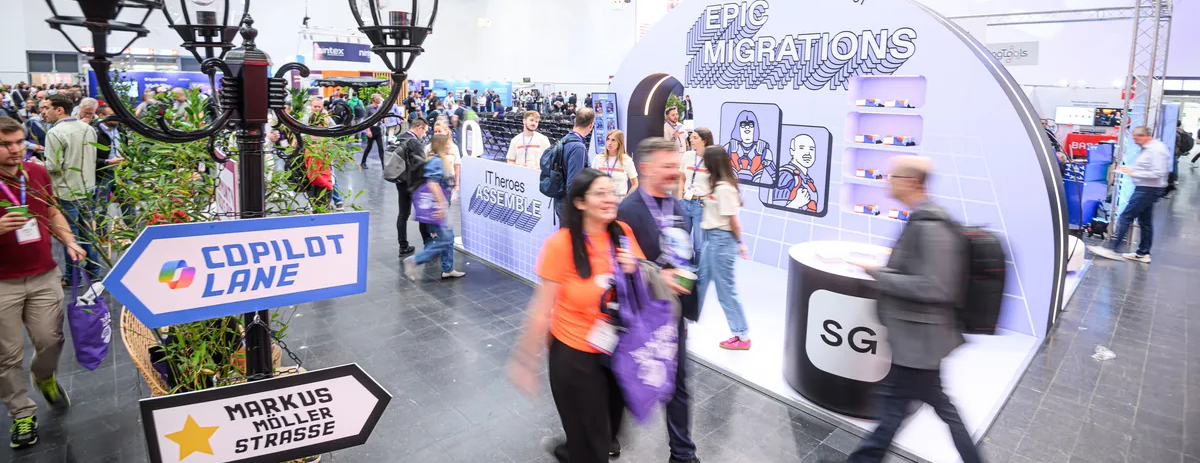

inControl is a safe, no-fluff space for event professionals who actually run events, not just talk about them. It’s where event professionals, technologists, marketers, venues and agencies share what really works, ask hard questions, and compare scars without the noise of self-promotion, cold pitches or "thought leadership" theatre.
inControl Meetup Dec 2025 - The next 5 years will define which event professionals thrive in the AI era
Join the December inControl Meetup with Prof. Stefan Luppold, Adis Jugo (Microsoft MVP for Artificial Intelligence), and Damir Tomicic (BeFuture Mentor)
Sign In
Live
How is AI changing lives of Event Professionals?
EF
Eleanor Forsyth
Thank you for an interesting discussion, appreciate all the insights and Stephanie's valuable contributions
SL
Stephenie Lintl-Mclean
Haha!
CL
Charmaine Lintl
Amazing! Thank you.
Anto Pranjic
Thanks everybody for tuning in! Have a great rest of the day 🙌
Elena Kovacevic
Thank you for a great discussion. I truly appreciate the insights and perspectives shared, and I look forward to inControl Summit! See you all in Dusseldorf on June 2nd.
AI vs Excel Sheets: A Battle That AI Can't Possibly Win
Modern events typically use seven different apps for registration, agenda, check-in, mobile experience, lead retrieval, marketing tracking, and surveys, plus countless Excel spreadsheets scattered across team members' desktops, making comprehensive data analysis practically impossible. This fragmentation prevents AI from delivering real value like predictive analytics and intelligent matchmaking, forcing organizers to settle for overpriced chatbots that answer basic FAQs while the truly transformative capabilities remain forever out of reach. The solution isn't choosing better AI but consolidating event data into unified platforms like run.events where registration, networking, and feedback happen within a single ecosystem, enabling AI to see the complete picture and deliver genuine insights in seconds rather than days of manual Excel work.
AI can't transform your event data into insights when that data lives in twelve Excel sheets, seven disconnected systems, and Sarah's desktop folder that nobody else can access.
Everyone Says AI is Expensive. Is That Really True?
The perception that AI is too expensive for event organizers doesn't match the reality of implementation costs versus savings. Modern AI tools integrated into event platforms can reduce marketing waste by 30-50%, eliminate thousands in website development costs, and replace temporary staffing expenses while delivering better results. For most events, the question isn't whether AI is affordable, but whether continuing without it is becoming the more expensive choice.
**AI implementation in events isn't expensive—it's the inefficiency of avoiding it that costs more.**
Sponsor success at events has always been predictable through observation, where two sales guys hunched over laptops signal failure while buzzing booths with engaged staff predict success, but this gut feeling wasn't scalable or scientific. AI-powered platforms like run.events now analyze sponsor performance with striking accuracy, tracking quality engagement patterns, predicting outcomes six weeks before events, and enabling real-time interventions when sponsors struggle on day one. The technology transforms post-event reporting from meaningless pleasantries into ROI-proof insights that capture CFO attention, revealing sponsorship as a predictable revenue generator rather than a marketing expense.
After fifteen years of walking expo halls with gut instinct, AI now predicts which sponsors will thrive or struggle before doors even open, turning sponsorship from hope-and-pray investment into data-backed revenue driver.
From Overwhelming to Personal: How AI Transforms the Expo Floors
Every event with 20+ booths faces the same problem: attendees miss the connections they came for while exhibitors waste time on unqualified leads. AI-powered platforms like run.events now offer sponsor spotting, product spotting, and buyer spotting to transform chaotic expo floors into curated experiences that drive measurable ROI. The technology isn't about replacing human interaction but removing the friction that prevents meaningful connections from happening in the first place.
Stop losing attendees in the chaos and turn your expo floor into a personalized matchmaking experience that sponsors actually want to pay for.
Elena Kovacevic
Chief Business Development Officer @ ecs.events •Nov 19
AI for Audience Intelligence: Who's Here Now, Who's Coming Next Year
Event organizers collect mountains of data but rarely analyze it properly, making the annual promise to draw meaningful conclusions that never materializes amid next event logistics. Modern AI-powered platforms like run.events automatically transform this unused data into actionable intelligence, forecasting attendance trends months out, identifying rising topic interests, and performing sentiment analysis that distinguishes engaged criticism from chronic complaints. The technology doesn't replace human judgment but eliminates guesswork, freeing organizers to focus on creating meaningful experiences while AI handles the pattern recognition that reveals what audiences actually need.
We're living in the Minority Report era where AI predicts future attendee behavior from current data, except instead of preventing crimes, we're preventing empty conference rooms and disappointed audiences.
When Technology Helps Hearts Connect: The New Science of Meaningful Event Networking
Traditional event networking is essentially a lottery system where attendees at a 2,000-person conference might connect with only 15 people out of 1,985 potential valuable contacts, making the odds of meeting the right person heartbreakingly small. AI matchmaking platforms analyze registration data, professional backgrounds, and networking intentions to create pre-scheduled meetings between people who specifically want to meet each other, transforming random encounters into substantive conversations with context. The technology amplifies rather than replaces human connection by creating the conditions for better interactions to flourish, with early data showing increased attendee satisfaction, better exhibitor lead quality, and measurable business outcomes.
At a 2,000-person conference, you'll have meaningful conversations with just 15 people while missing 1,985 potentially valuable contacts, but AI matchmaking is finally solving this mathematical tragedy that's haunted business events for decades.
Is AI Worth It? Lessons from the Olympics and McDonald's
The Paris 2024 Olympics showcased AI's potential to handle complex event management, from reducing scoring disputes by 65% to cutting carbon footprints in half. Meanwhile, McDonald's AI ordering system failed after three years, highlighting the technology's limitations. For event professionals, the sweet spot lies between these extremes: start with small, practical AI tools that augment human capabilities rather than replace them entirely.
From Olympic triumphs to McDonald's missteps, discover what AI can actually do for your events and what it can't.
How We Ditched Our Web Agency and Lived to Talk About It
Traditional event website development involves a painful dance with agencies through endless revision rounds, taking months and significant budget to produce something that's never quite right. The European Collaboration Summit website was built over a weekend using AI agents called Amal (Copywriter, Designer, and Coder) within the run.events platform, achieving top PageSpeed scores and genuine audience love without human designers or developers. This technology doesn't just level the playing field for smaller events with limited budgets, it fundamentally redefines event marketing by enabling instant market response and maintaining authentic voice while freeing organizers to focus on creating exceptional experiences rather than managing vendor coordination.
We built a world-class conference website in one weekend using AI agents instead of a web agency, proving that the barriers between vision and execution have finally crumbled.
Traditional conferences struggle to create meaningful experiences for diverse attendees with different expertise levels, learning objectives, and networking goals. AI-powered personalization solves this by analyzing pre-event and real-time data to deliver intelligent session recommendations and smart networking matchmaking that connects attendees with the right people at the right time. The transformation requires comprehensive data collection through enhanced registration forms and pre-event surveys, paired with the right event management platforms that ensure GDPR compliance and seamless integration.
AI transforms conferences from one-size-fits-all experiences into personalized journeys where every session, networking opportunity, and content piece adapts to each attendee's unique goals and interests.
Elena Kovacevic
Chief Business Development Officer @ ecs.events •Nov 6
Early AI chatbots were disasters that gave away free tickets, confidently invented swimming pool parties in March Germany, and could be convinced they were World War II soldiers, creating industry-wide trauma that scared event organizers away. Modern AI support has evolved dramatically with better grounding technology that constrains responses to verified knowledge, but success requires comprehensive FAQ segmentation across different audience levels and regular updates rather than set-and-forget implementation. Platforms like run.events now enable strategic deployment where public websites get general AI chat while mobile apps for registered attendees offer personalized recommendations, turning support into real-time market research that reveals attendee concerns and shapes future event strategy.
AI support chat went from industry laughingstock (remember when chatbots offered unlimited 100% discount codes?) to strategic advantage, but only if you feed it quality data and stop repeating early adopter mistakes.
Embracing AI in the Events Industry: From Fear to Strategic Advantage
This article explores how artificial intelligence is rapidly reshaping the events industry and why fear or denial is no longer an option for event professionals. It argues that AI has already become a commodity in everyday life and that real competitive advantage will come from thoughtful, strategic integration. The piece highlights practical applications, changing marketing realities, and invites readers to see AI as an ally that can turn uncertainty into opportunity.
How event professionals can turn AI anxiety into their strongest strategic advantage
Not knowing where conversions come from is guessing, not marketing
New AI-powered browsers like Comet are eliminating traditional digital advertising by blocking ads and replacing search results with direct AI answers, forcing event marketers to abandon the "spend more on Google Ads" playbook. The solution isn't more budget but precision marketing driven by clean attribution data that tracks every registration back to its true source. AI transforms this data into actionable intelligence, helping marketers understand why campaigns work and discover new channels, while humans focus on the creativity and storytelling that AI can't replicate.
When AI browsers started blocking every ad and replacing search results with answers, event marketers lost their biggest weapon and gained their most important one: the truth about what actually drives registrations.
In Control Webinar: Live AI Captioning on Events (featuring Orla Pearson)
This webinar, originally streamed on November 5th, brings together Orla Pearson (Founder & CEO at MyClearText and AccessLOOP) and Damir Tomicic (Mentor at BEFuture and CSO at run.events) for an in-depth look at how AI captioning is transforming accessibility, multilingual engagement, and global reach across the event industry.
Website traffic dropped 23% while brand awareness climbed, revealing a fundamental shift in how people discover events: AI assistants now research and recommend conferences without users ever clicking through to event websites. The counterintuitive solution wasn't fighting this change but embracing it by ungating valuable content and optimizing for AI citations instead of search rankings. Organizations thriving in this new reality focus on building algorithmic trust and relationship depth rather than chasing page views and form submissions.
When AI started answering questions about our events before anyone visited our website, we had to completely rethink what success looks like.
Thank you for an interesting discussion, appreciate all the insights and Stephanie's valuable contributions
Haha!
Amazing! Thank you.
Thanks everybody for tuning in! Have a great rest of the day 🙌
Thank you for a great discussion. I truly appreciate the insights and perspectives shared, and I look forward to inControl Summit! See you all in Dusseldorf on June 2nd.